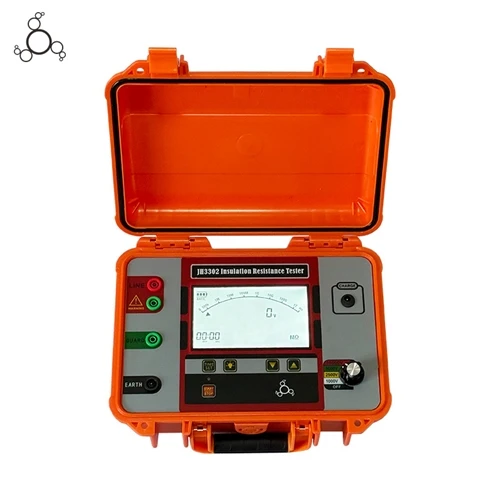
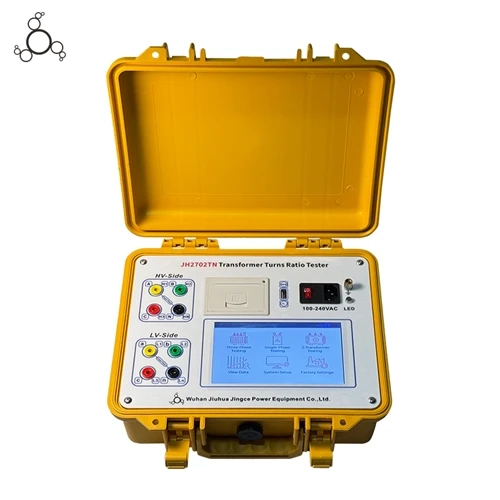
The high-end transformer testers you're interested in truly differentiate themselves from ordinary equipment in terms of performance and user experience. These devices often represent the cutting edge of industry technology and are designed specifically for demanding scenarios.
High-end transformer testers typically possess the following significant characteristics, far exceeding those of basic functional equipment:
Highly Integrated and Modular Design:
A single device integrates ten functional modules, including turns ratio, DC resistance, no-load/load loss, dielectric loss, capacitance, and on-load tap changer testing, achieving "one-time wiring, one-click testing." For example, the integrated intelligent comprehensive tester developed by the State Grid Jiangsu Electric Power Research Institute combines the functions of seven traditional instruments into one, reducing testing time from 8 hours to 2 hours.
Fully Automatic Intelligent Operation:
Supports automatic wiring identification, automatic range switching, automatic data acquisition and result analysis. The operating interface uses a 10.1-inch capacitive touchscreen with a fully Chinese graphical menu, allowing even beginners to quickly get started. Some models can even automatically generate electronic reports and upload them to the PMS system, avoiding manual data entry errors.
Ultra-high Measurement Accuracy and Wide Frequency Response:
Basic LCR parameter measurement accuracy reaches 0.05%–0.2%, and the turns ratio accuracy is approximately 0.1%–0.5%. The test frequency range covers 20Hz to 2MHz, meeting the testing needs of high-frequency transformers and precision power equipment. High-end models also feature intelligent algorithms such as waveform distortion correction and temperature compensation, improving the reliability of on-site measurements.
Excellent Portability and Field Adaptability:
Despite its powerful functions, it emphasizes lightweight design, weighing between 6–12kg. It has a built-in high-efficiency rechargeable battery, supporting continuous operation without external power, adapting to complex environments such as substations and field construction sites.
Powerful Data Management and Networking Capabilities:
Supports storing hundreds of data sets and is equipped with USB flash drive export, RS232 interface, or wireless transmission capabilities. Some devices can directly connect to power management systems (such as PMS3.0) to achieve automatic task reception and intelligent result diagnosis, with 100% accuracy in device status diagnosis.
[Further details about the device's capabilities are needed for a complete translation.] Enhanced safety protection mechanisms:
Equipped with multiple safety designs including overvoltage, overcurrent, reverse connection protection, and discharge alarm. Some models have a built-in intelligent judgment system that can automatically identify wiring errors and provide prompts, reducing operational risks.